Design Leadership

Design Leadership at Maven

Tripled my design scope across Benefits, Care Delivery, Fertility, and AI Assistant, and shipped Maven's first AI features. Every one of them was built with the craft to answer a question already costing a member or the business something.

RoleDesign Manager → Senior Design Manager
ScopeBenefits, Care Delivery, Fertility, AI Assistant
DurationOctober 2023 — Present
About Maven

Maven is the world's largest virtual clinic for women's and family health, serving members from preconception through menopause. When I became a design manager in October 2023, we'd just launched Maven Managed Benefit and earned our biggest client on the strength of it. The job was to prove it was worth what we'd promised, and keep that client.

Benefits: the expensive questions

Three years since launch, Maven Managed Benefit accounts for nearly $45M in annual revenue and close to 25% of enrolled members in Maven's fertility program.

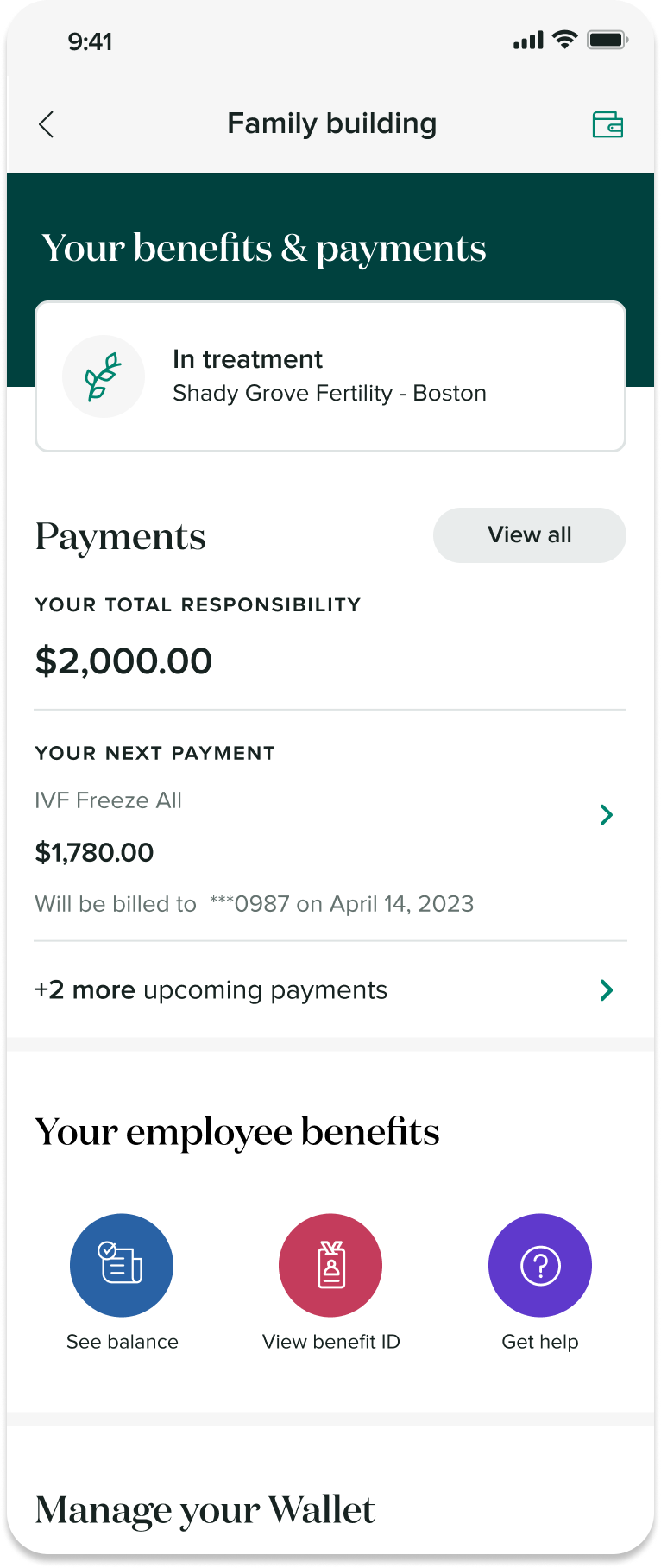
Our original plan let members pay for treatment upfront and pursue care without a bill hanging over them, but that assumed a trust we hadn't earned yet with thousands of dollars at stake. We shifted to estimate upfront, collect after, which kept our transparency promise and made the estimate itself load-bearing. The client we launched with is still a client today, nearly three years later.

A year in, I fought to keep the cost estimate feature when operations wanted to cut it for accuracy and engineering-cost reasons. Estimates were a stated differentiator against competitors like Progyny, and members cited them in NPS feedback as what let them financially plan for treatment. We kept the feature and strengthened the qualifying language instead of rebuilding it outright. Over the next two and a half years, I led design to scale MMB through rapid growth.

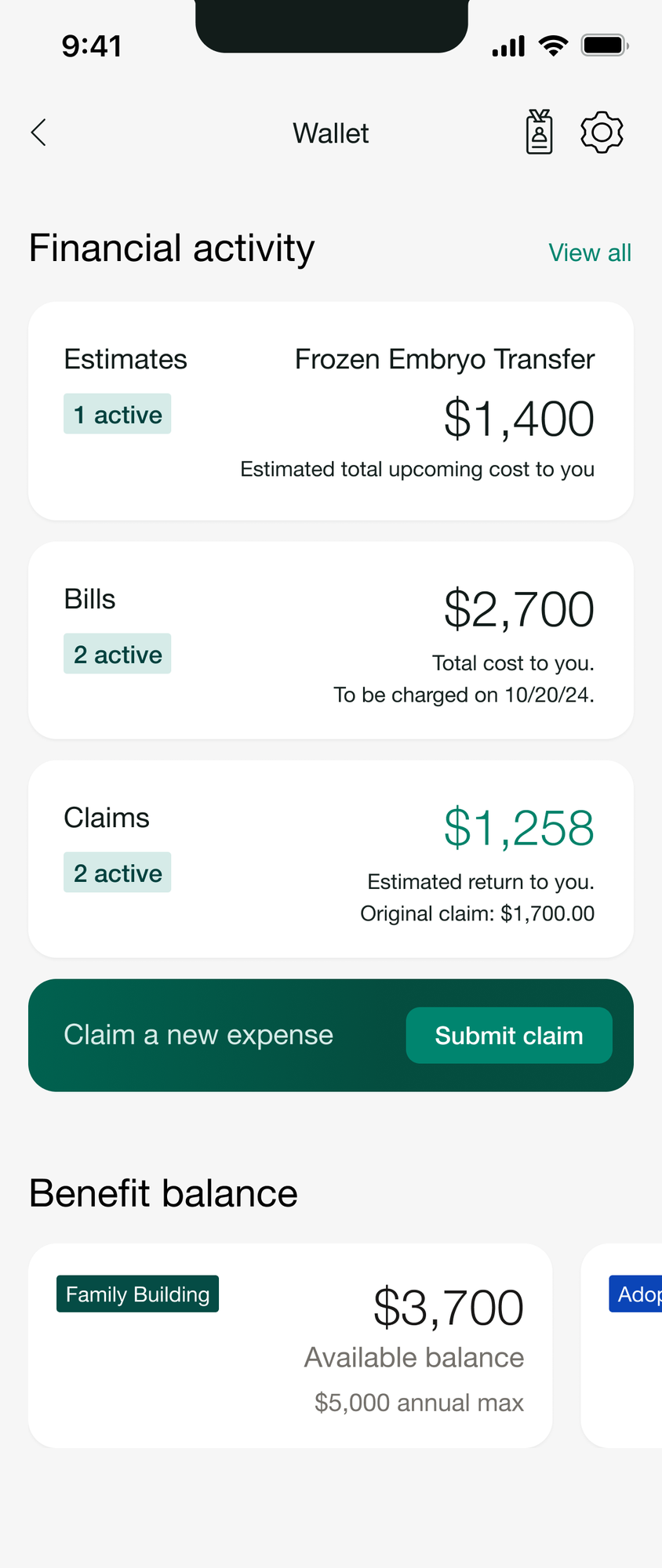
Dashboard redesign

Wallet categories used to live in separate views, reached by manually switching between them, MVP debt I knew going in. I framed the problem for the designer who rebuilt it: one dashboard, every category visible at a glance, still the shape of the product today.

Benefits explorer

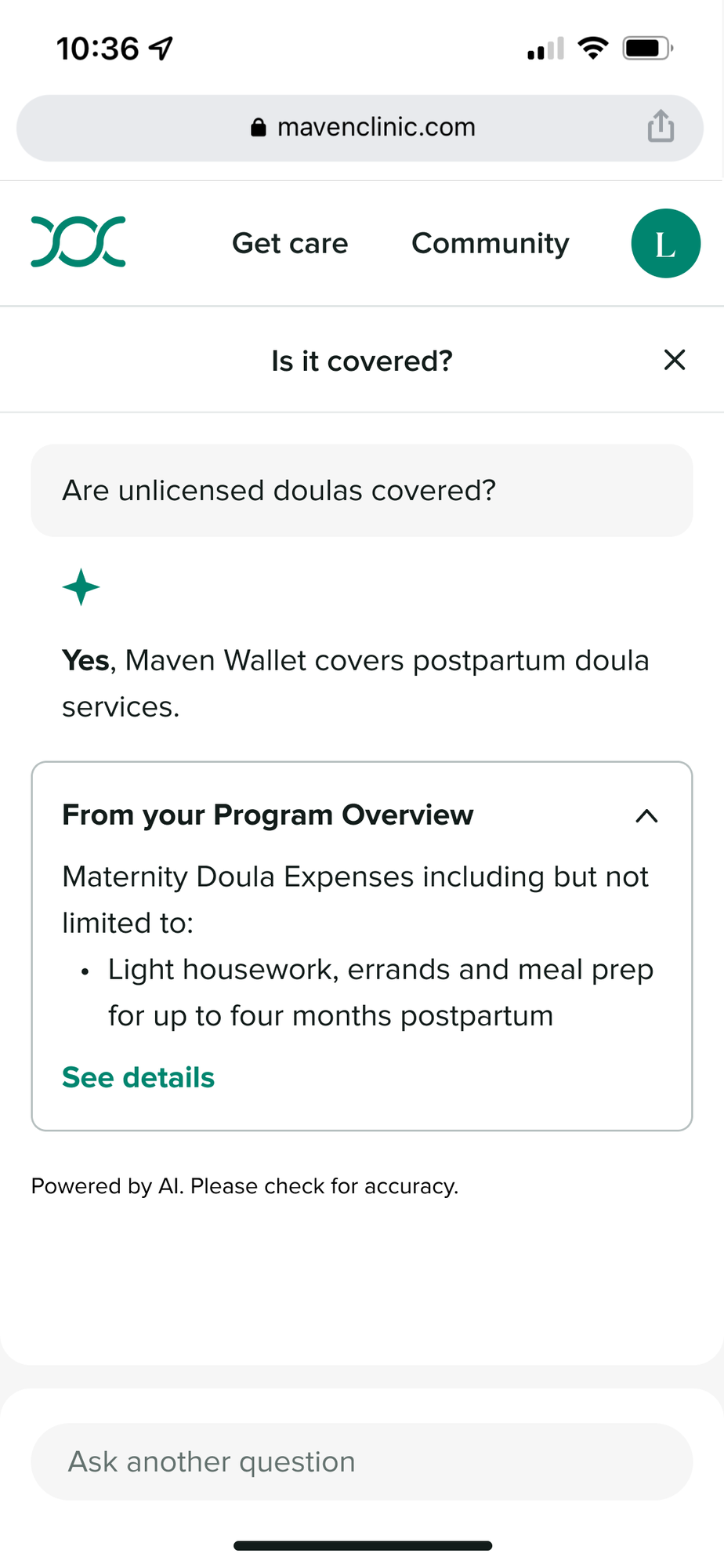
Working with our member services manager, I found her team's most expensive-to-answer question: “is this covered?” I identified AI as the fix, set the requirement that answers link back to their source, and handed the design to a designer on my team.

Reimbursement tracker

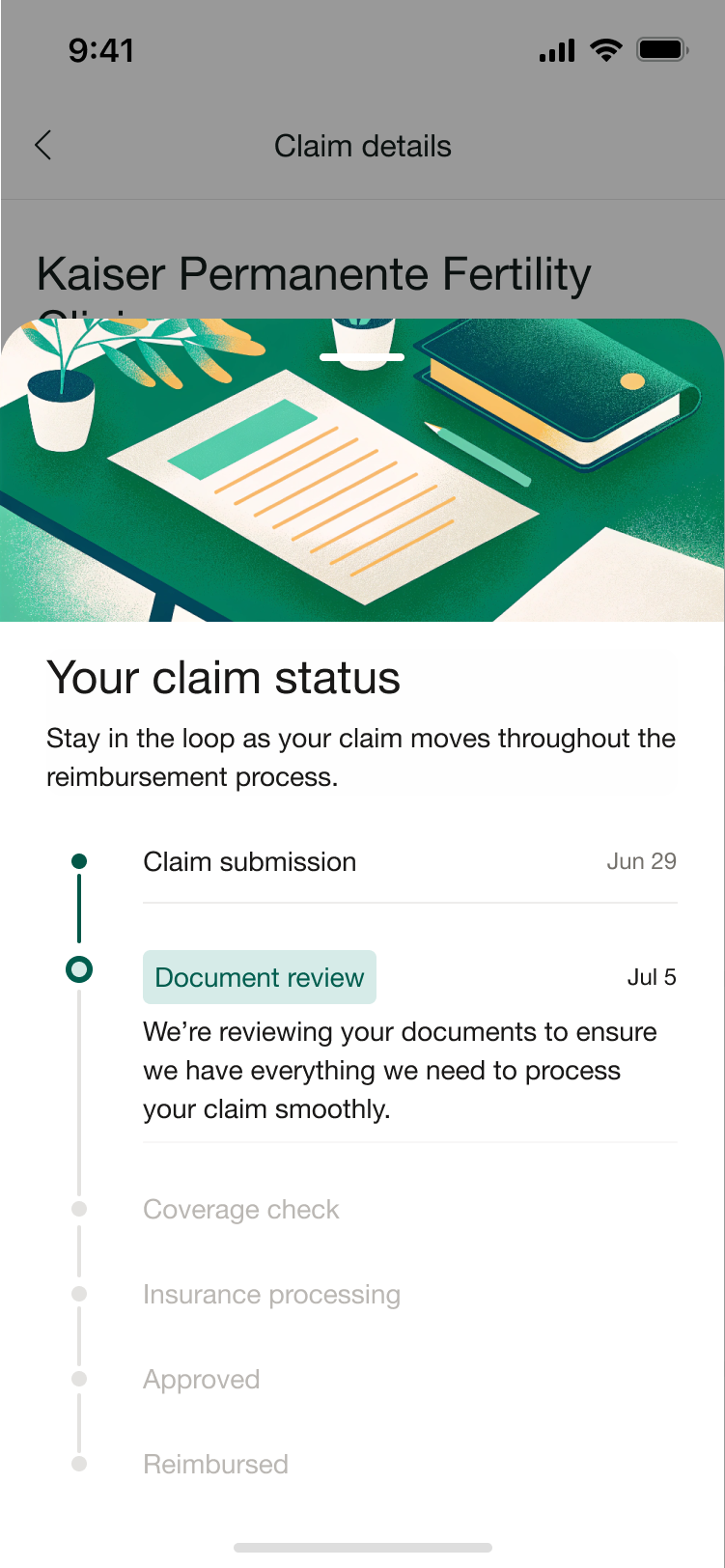
Members had no visibility into their reimbursement status. I gave it to my newest designer as his first stretch assignment: wallet-related escalations dropped 16% year over year, and status inquiries reversed their upward trend even as volume grew.

Clinic Finder

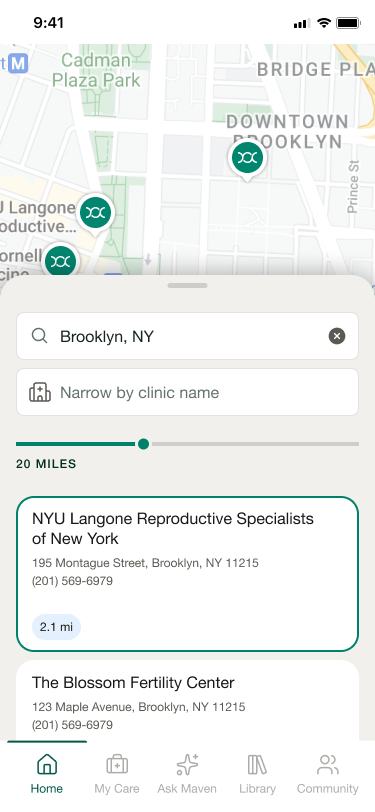
We'd deliberately cut a real tool at MVP launch and shipped a PDF directory instead. I got it prioritized on the roadmap; the prototype shipped in under three sprints.

Available balance

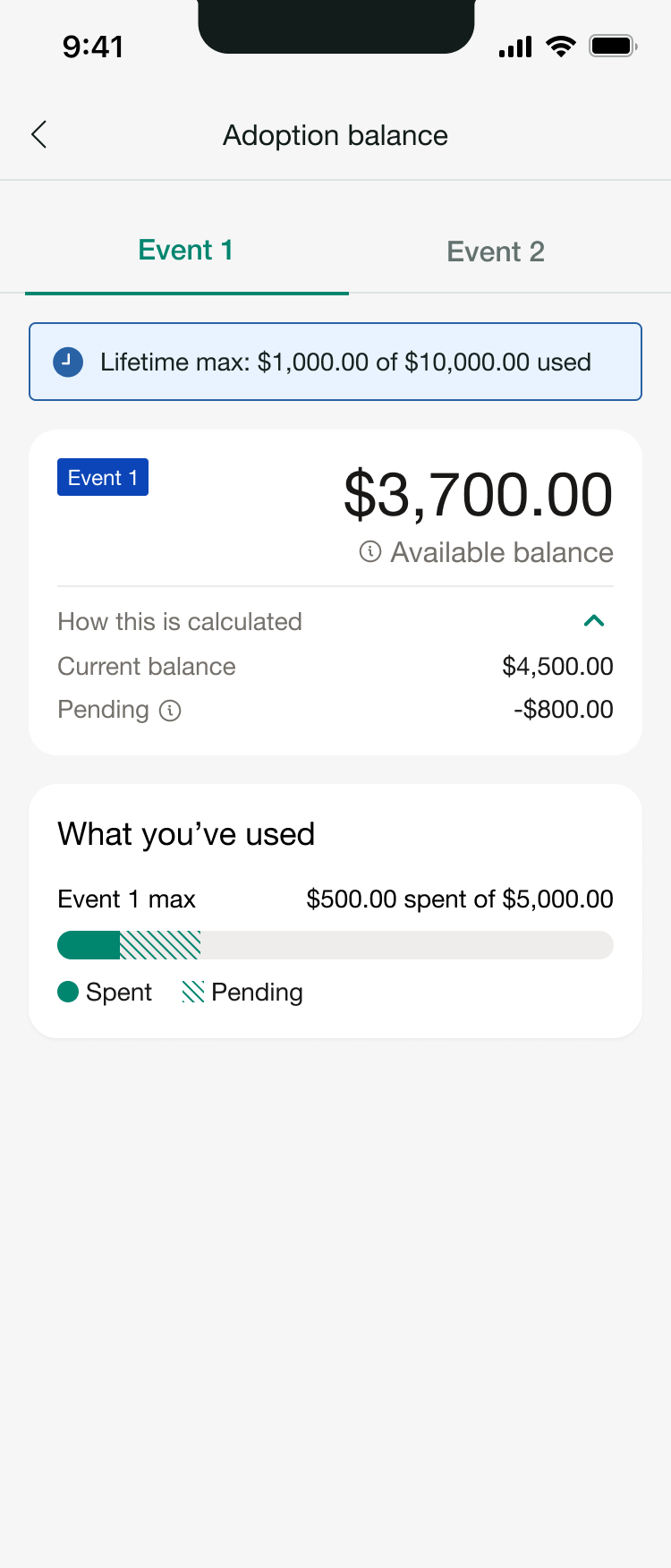
Non-standard plan types weren't displaying accurately, confusing members and support about balances. I passed on the plan domain knowledge the designer needed to fix it.
Dashboard redesign — before, categories split across separate views
Dashboard redesign, before
Dashboard redesign — after, every category visible at a glance
Dashboard redesign, after
Benefits explorer — AI answer with source link (v1)
Benefits explorer (v1)
Reimbursement tracker — claim status timeline
Reimbursement tracker
Clinic Finder — map and list of nearby clinics
Clinic Finder
Available balance for a multi-event adoption plan, showing lifetime and annual max usage
Available balance

Each of these started as a support ticket or a line in NPS feedback, not a design idea looking for a problem.
Care Delivery: where virtual care actually happens

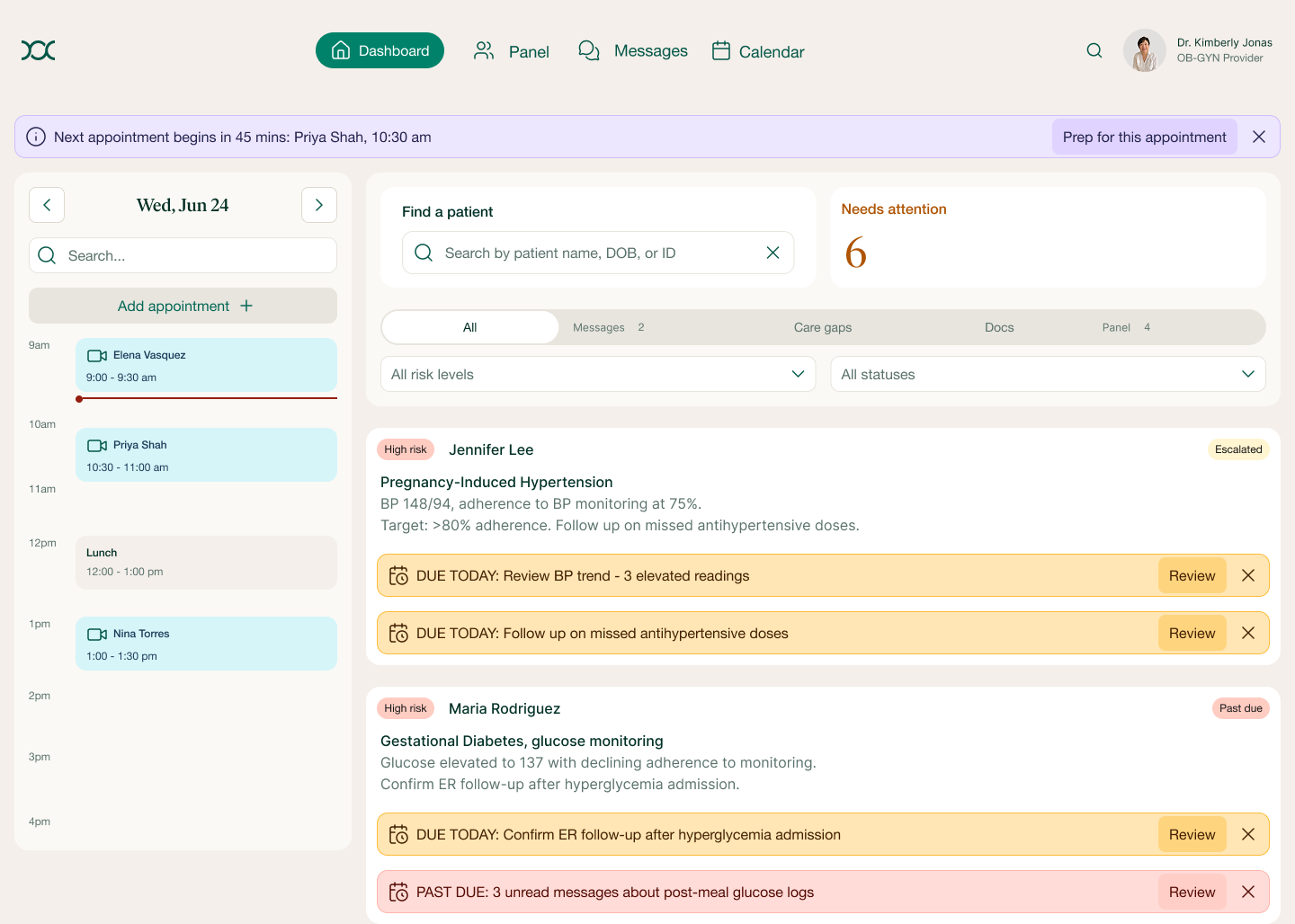
Care Delivery came under my scope in January 2025. Virtual care is Maven's core differentiator, with every provider touchpoint running through it.

MPractice Assistant

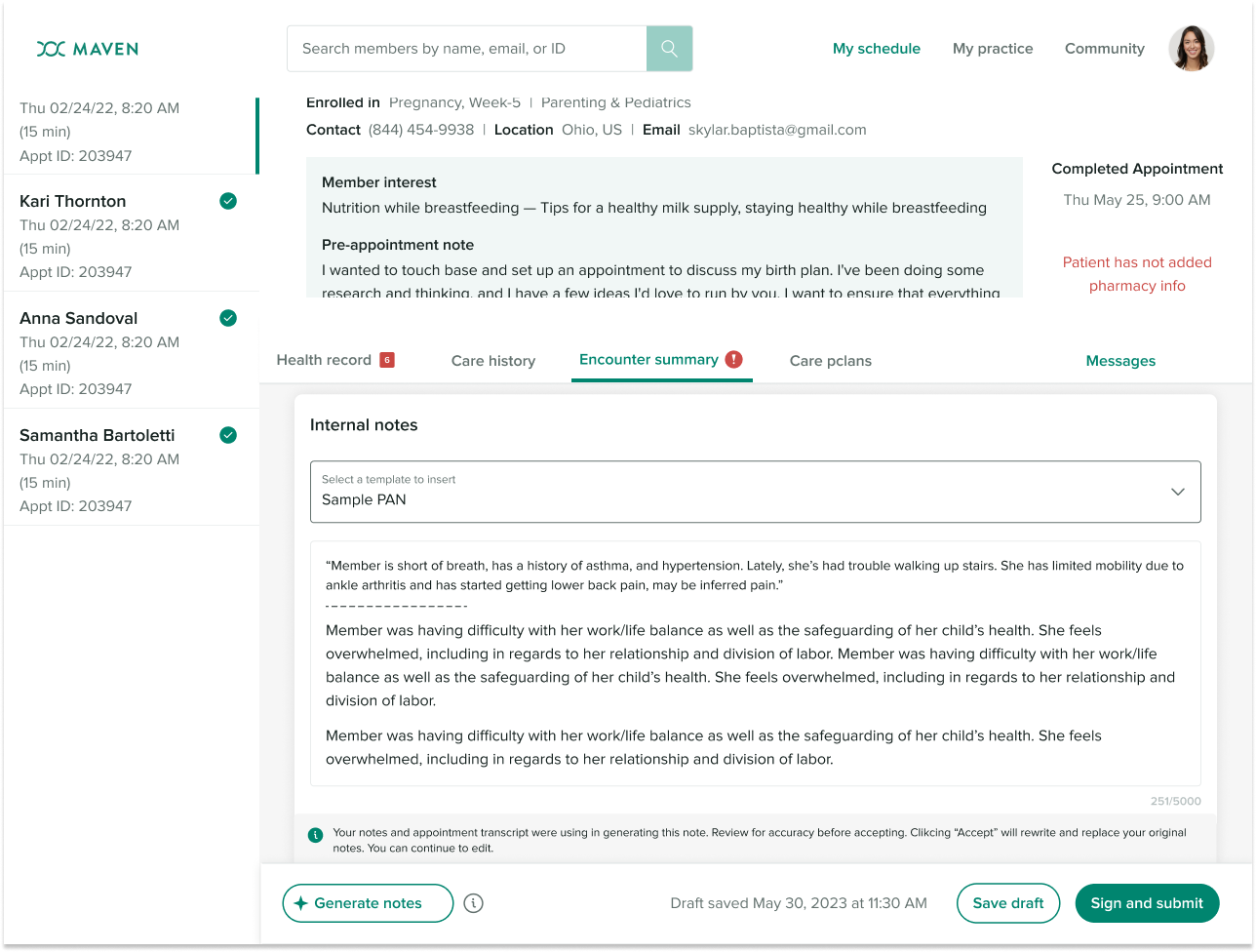
AI-generated transcription and note-generation is the most loved feature in MPractice, Maven's homegrown EHR. It drafts the visit note in real time, saving providers 8 minutes per appointment and improving satisfaction for both providers and members. It was also providers' first real exposure to AI in the platform, and it built trust instead of threatening it, which mattered for everything that came after.

No Shows

A feature born out of a hackathon lets providers mark a no-show in one step instead of manually documenting an appointment that never happened, saving roughly 40 hours a month in aggregate.

MPractice Assistant — real-time visit note generation
MPractice Assistant

MPractice has accumulated years of added data as Maven scaled, making it harder for providers to find what matters about a member. Rethinking its core architecture, unshipped, is my current focus, to keep it scalable as Maven becomes more clinically rigorous.

MPractice concept design — reworked provider dashboard navigation
MPractice concept design

Any provider-facing feature a clinical program wants, like Maternity or Fertility, launches inside MPractice rather than as a separate surface. When a program needed providers to see a member's NICU status, that view went into MPractice too, keeping care longitudinal instead of siloed.

Maven Assistant: designing for AI, and with AI

At launch, Maven Assistant deflected roughly 94% of member conversations without a human agent, over 99% for general health questions, and organizations with it enabled saw meaningfully higher engagement than those without.

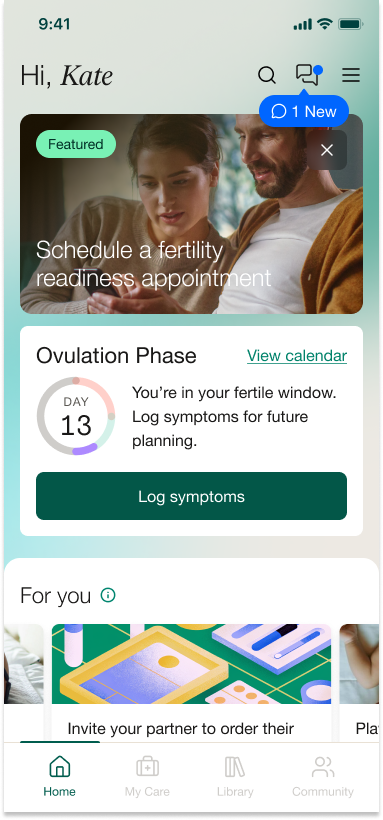
A dedicated home for provider messages

Early data showed members struggling to find messages from their actual providers, now crowded out by the assistant. I made the call to keep a unified inbox and handed a designer that constraint to solve for: a dedicated provider-messages entry point in the homepage toolbar, distinct from the assistant's bottom-nav presence. “Where are my messages” conversations dropped, and the new entry point drove real engagement with provider messages instead of abandonment.

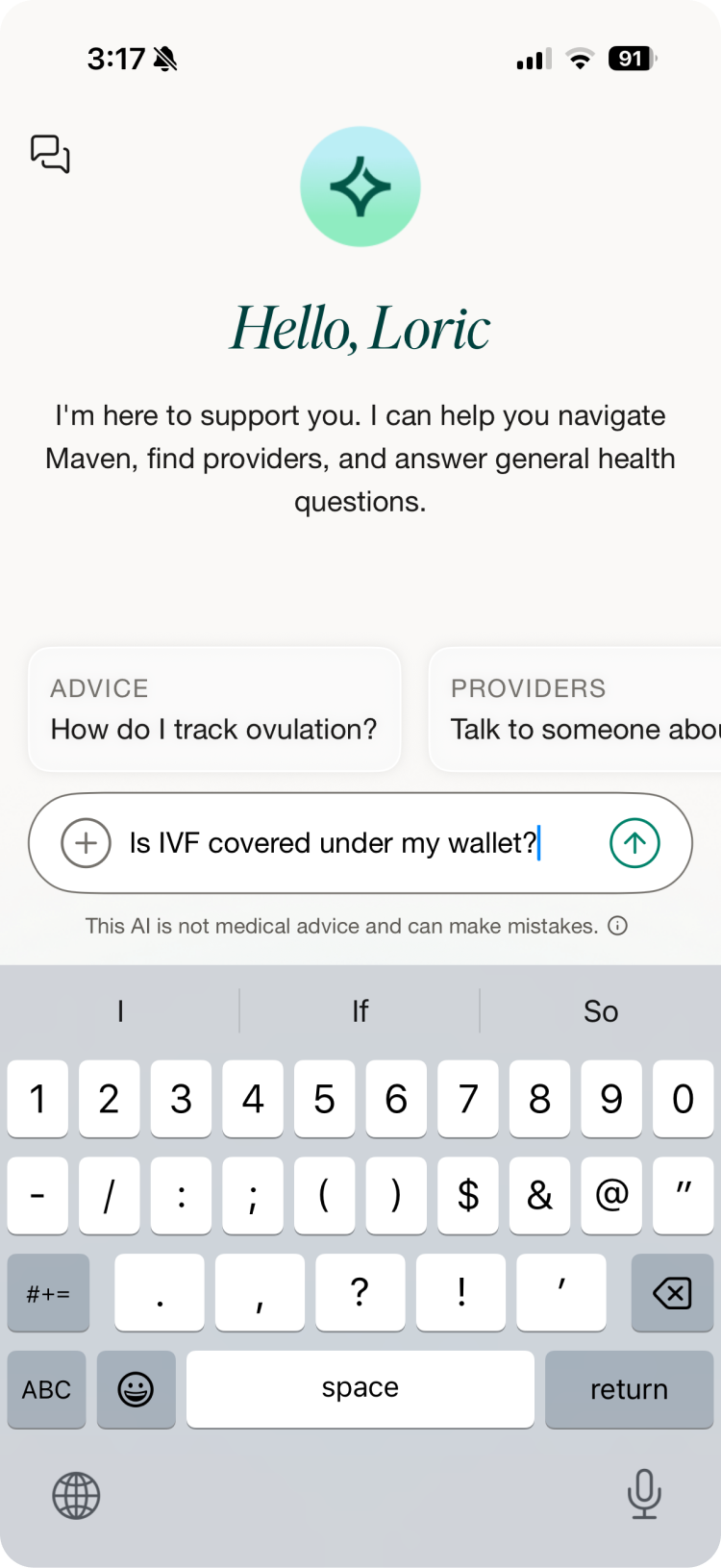
Benefits explorer, rebuilt for Assistant

Benefits explorer shows the same arc at scale: built as a Benefits initiative, then rebuilt inside Assistant once the platform existed. The first version handled only standard reimbursement Wallet plans (70% deflection); expanded to cover every Wallet type, including Managed Benefit, it now handles roughly a third of all Assistant conversations, deflects 87%, and hands off to support when it can't make a confident call.

Provider messages entry point in the homepage toolbar
Dedicated provider messages entry point
Benefits explorer inside Maven Assistant
Benefits explorer, rebuilt for Assistant

Beyond the product, I led AI enablement for the design team as part of our VP of Design's broader push to make AI real across Maven, building the tools, knowledge, and workflows for the team to experiment with.

Fertility: the outcome behind the outcome

My Benefits background made fertility a natural fit: Maven Managed Benefit is a flagship product, but the fertility care program behind it is the differentiator.

Fertility's real goal is clinical: more members achieving pregnancy with no or low-intensity treatment. Since you can't design for a clinical outcome directly, the lever is engagement, getting members to actually use and return to the app so they get routed to the right care.

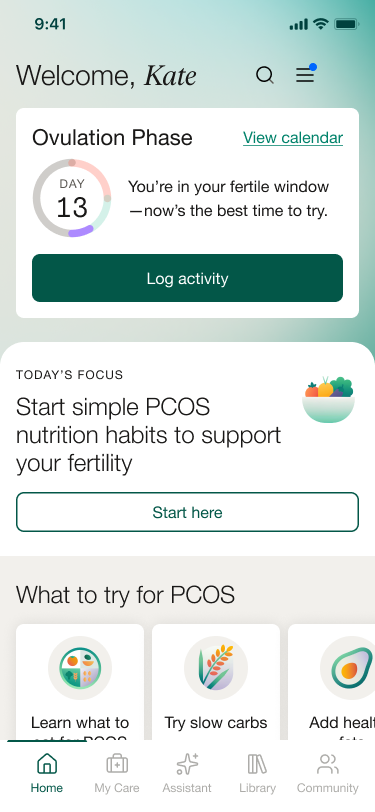
Condition-specific care pathways

We launched our first condition-specific care pathways, for PCOS and oncofertility, the latter in partnership with Color Health to route their members to the right fertility resources. Both are early, laying the foundation for care pathways we expect to lower treatment costs over time.

PCOS condition-specific care pathway
Condition-specific care pathways

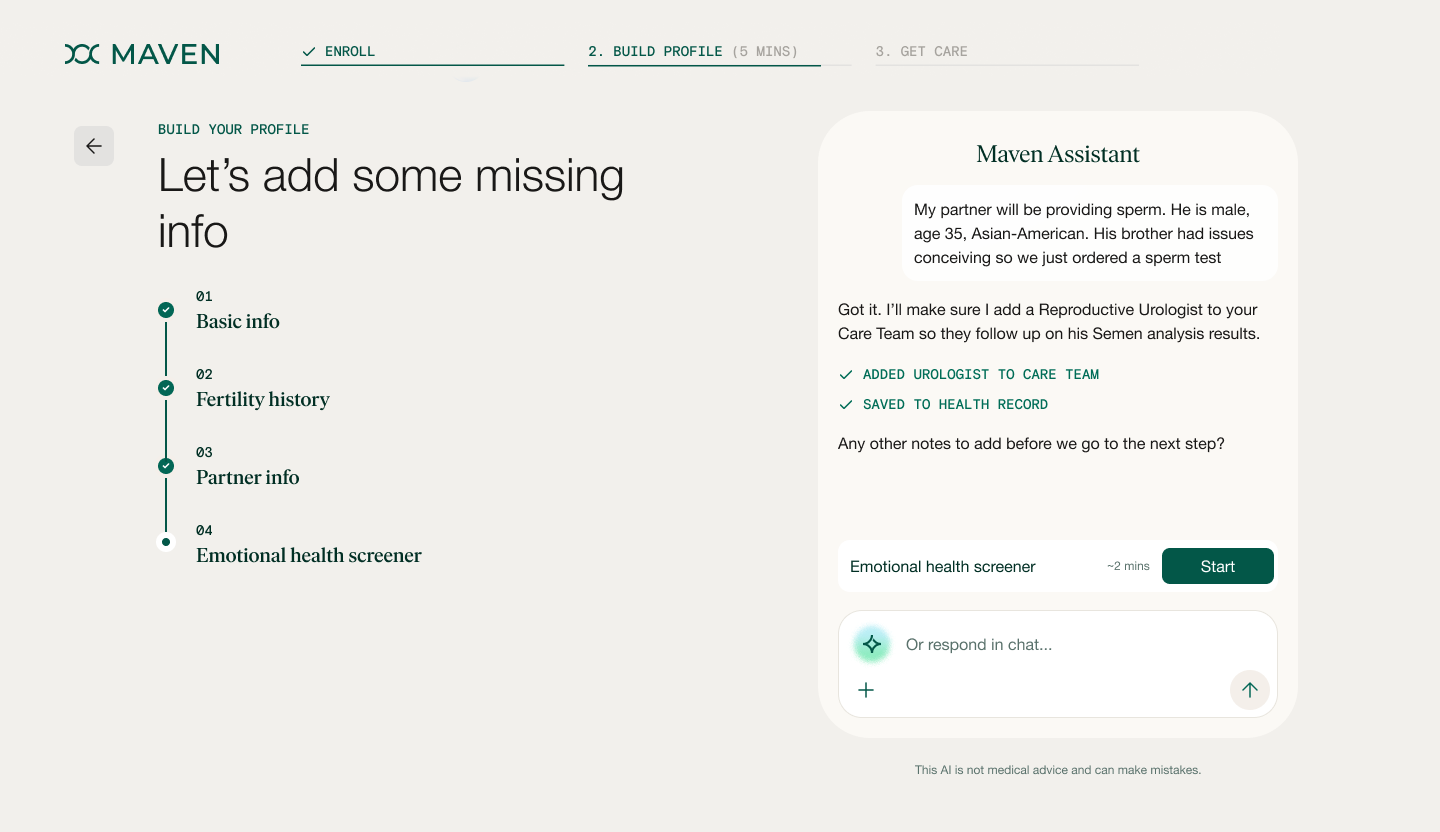
AI-driven onboarding

We tested an AI-driven onboarding against the traditional assessment to make onboarding a personalized front door to care instead of a generic intake form. It took longer but held a 94% completion rate and surfaced information the form never captured, so we're building a hybrid: AI for open-ended conversation, a questionnaire for discrete health data.

AI-driven onboarding vs. traditional assessment
AI-driven onboarding

Fertility home

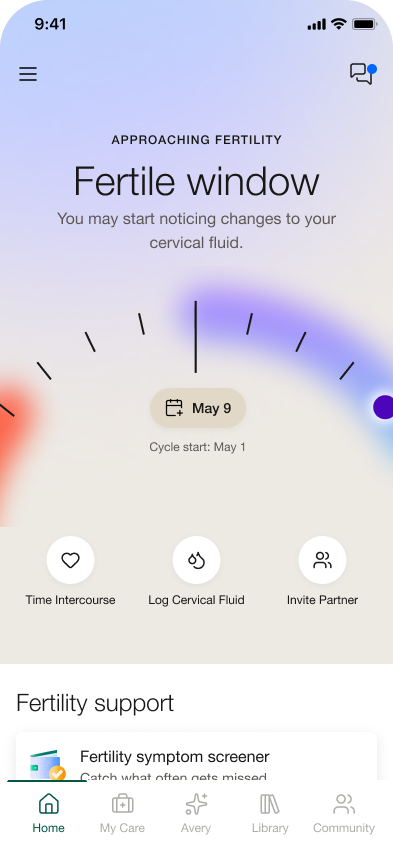
Fertility home is still in design: replacing a static dashboard with something dynamic and personalized enough that members actually come back to it.

Fertility home redesign — in progress
Fertility home (in progress)
Impact
$45MAnnual revenue driven by Maven Managed Benefit
87%Deflection rate of the expanded Benefits explorer inside Assistant
16%YoY drop in wallet-related escalations after the reimbursement tracker shipped
8 minSaved per appointment by MPractice Assistant's AI note-generation
40 hrsSaved per month by the No Shows feature
94%Completion rate for the AI-driven fertility onboarding test
Conclusion

Every one of these efforts started with a question already costing someone something: a support ticket, a denied claim, a static dashboard nobody returned to, a provider typing through a session instead of being present in it. Benefits found those questions in what members were asking. Care Delivery found them in what was eating a provider's time. Fertility found them one layer removed, in the engagement standing between a good product and a clinical outcome. Assistant answered the same “is this covered” instinct with different technology.

None of that required a grand plan. My scope grew from one product area to four because each expansion followed proof that I could handle the one before it, and because the work kept making the case: revenue, retention, minutes saved, clients earned and retained.